
Is crypto helpful or unhelpful for tokenisation? Notes from the FOF panel

Photo: Future of Finance
 Event: Future of Finance Tokenisation 2026, London
On October 14, Avishay Yanai, CEO of Soda Labs, joined a panel at Future of Finance's Tokenisation 2026 in London. The panel's question: is the cryptocurrency industry helpful or unhelpful for tokenisation?
Dominic Hobson moderated, and Yanai shared the stage with Mac Mahalingam, Felix Haynes, Jake Moilanen and Mark D. Garabedian, CFA. Soda Labs thanks them, and Wendy Gallagher and Future of Finance for hosting. These notes cover the view Yanai argued.
Crypto built the rails
The crypto industry proved in public that an asset can live on a shared ledger, move without layers of reconciliation, and carry its rules in code. So, in Yanai's view, crypto has been helpful.
But helpful isn't the same as ready. As Yanai put it, crypto built the rails, and tokenisation needs them to grow up.
 Photo: Future of Finance
The trade-off institutions can't accept
On most public blockchains, every balance and every payment is visible to everyone. For a bank or an asset manager, that's a non-starter. Client positions, counterparties and treasury flows are exactly what they're obliged to protect.
The opposite extreme fails too. A system nobody can audit can't carry regulated assets. So, Yanai argued, institutions need confidentiality plus controls:
- Confidential balances, amounts and counterparties. Private balances and transfer amounts are encrypted, so the whole world can't read them. Anonymous balances aren't linked to an account's main address, so who paid whom isn't public either. Amounts moved in or out of the public token stay visible.
- Compliance at the account level. Rules and disclosure attach to the specific account, not to a whole pool or chain.
- Scoped disclosure. An auditor, regulator or counterparty sees what they're entitled to see, without it becoming public to everyone.
Without this, in Yanai's view, institutions will pilot, and then wait.
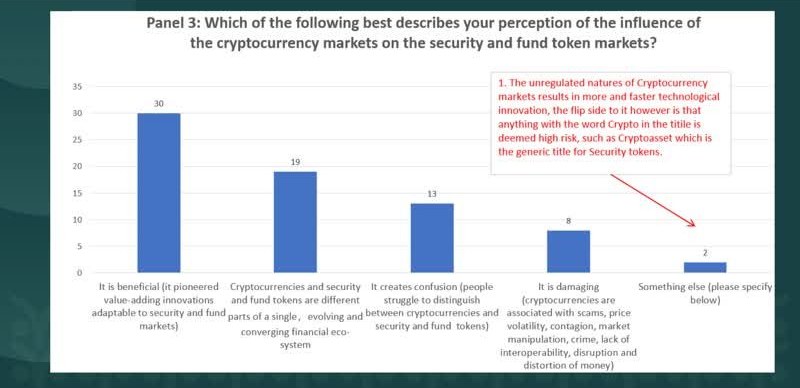 The room's answer, from the live audience poll. Image: Future of Finance
Mutable mechanisms on immutable rails
One point Yanai raised on the panel: institutions are designing mutable mechanisms on top of immutable rails.
That can work. But, Yanai noted, if the industry only replicates traditional finance on new rails, it loses what made the rails worth moving to. The better path is rails that carry confidentiality and controls natively.
Privacy as infrastructure
Yanai pointed out that the internet went through this. Early encryption tools asked users to install software and manage keys, and they stayed niche. What worked was encryption built into the infrastructure: TLS in the browser, invisible to users, driven by e-commerce.
Tokenisation, in Yanai's view, is at the same point. Institutions don't want a privacy product bolted on. They want the rails themselves to grow up.
What Soda Labs builds
Privacy is the missing layer, and that's what Soda Labs builds.
Soda Bubble uses garbled-circuit MPC so smart contracts on existing EVM chains can compute on encrypted data, with no migration to a new chain. Disclosure is selective: ACL grants decide who can decrypt which values, so a specific party, such as an auditor or regulator, gets access to what it needs. The access control list lives in a smart contract, so anyone can check which access grants have been issued. Values are encrypted with standard AES.
Helpful, and not finished
Yanai's answer to the panel question: helpful, and not finished. If you're building tokenised assets or institutional on-chain products and keep hitting the "public forever" problem, talk to Soda Labs at sodalabs.xyz.
Gallery

 Photos: Future of Finance
Read more: how Bubble works · the privacy landscape